Just-in-time schedules
OEM plants call off parts against delivery schedules, so dispatches are frequent and time-bound, and gate entry often checks the invoice and e-way bill together.
Industry · Automotive components and auto parts
Auto parts suppliers ship to OEM plants on tight schedules, often several times a day. A wrong or missing e-way bill can hold a truck at the plant gate and stop a line.
Quick answer: Auto component dispatches to OEM plants need an e-way bill for each invoice whose consignment value exceeds ₹50,000. In a milk-run, where one vehicle collects from several suppliers, each supplier generates the e-way bill for its own invoice, and a consolidated e-way bill can group them for the vehicle. Parts sent to a job worker in another state for plating, heat treatment or machining need an e-way bill irrespective of value.
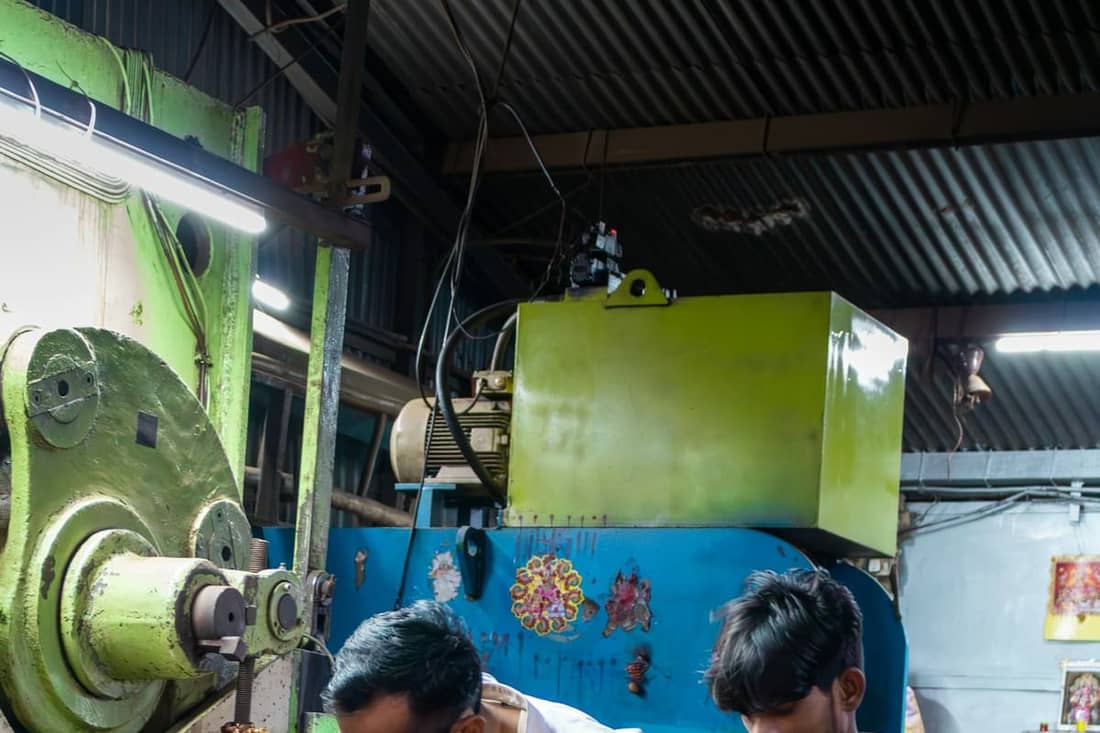 Auto Components
Documents for every dispatch
Sales invoice with GST
GST-registered and selling taxable goods? Issue a tax invoice with GSTIN, HSN and CGST + SGST or IGST. Make one free.
Invoice without GST
Not registered, composition or exempt goods? A bill or bill of supply with no tax charged. Make a bill without GST.
E-way bill
Needed when the consignment value is over ₹50,000, and always for inter-state job work. See which auto components movements need one.
How goods move
OEM plants call off parts against delivery schedules, so dispatches are frequent and time-bound, and gate entry often checks the invoice and e-way bill together.
One vehicle arranged by the OEM or a logistics provider collects parts from several suppliers on a route and delivers to the plant.
Castings and machined parts go out for plating, heat treatment, painting or machining and come back before final dispatch.
Parts travel in returnable bins, trolleys and pallets that come back empty from the customer.
E-way bill position
The ₹50,000 limit is checked per consignment, including GST. Some movements need an e-way bill whatever the value. See the e-way bill rules for the full picture.
| Movement | Document | E-way bill |
|---|---|---|
| JIT dispatch of parts to an OEM plant | Tax invoice | Required if the consignment value exceeds ₹50,000 |
| Milk-run vehicle collecting from several suppliers | Each supplier’s own tax invoice | Each supplier generates for its own invoice above the limit; consolidated e-way bill possible for the vehicle |
| Parts sent to a job worker in another state (plating, heat treatment, machining) | Delivery challan (Job Work) | Required irrespective of value |
| Parts sent to a job worker in the same state | Delivery challan (Job Work) | Required if the value exceeds the limit (check your state’s intra-state limit) |
| Rejected parts returned by the OEM | As agreed (often the customer’s return document); portal sub-type Sales Return | Required if the value of returned goods exceeds the limit |
| Empty returnable bins and trolleys coming back | Usually a delivery challan | Depends on the facts; check the position with your adviser |
Watch out
A mismatch between the invoice and the e-way bill, such as a wrong vehicle number or value, can hold the vehicle at gate entry.
The milk-run vehicle number is often known only at pickup. Part B must carry the correct vehicle before the parts move.
A small lot sent to a plater in the next state still needs an e-way bill. The value limit does not apply to inter-state job work by a principal.
An e-way bill cannot be edited. A wrong Part A detail means cancelling within 24 hours and generating a new one.
E-Way Easy app
Create the GST invoice and generate the e-way bill in one flow, with saved OEM buyers and part numbers with HSN and rates.
Use Bill To / Ship To so the e-way bill shows the correct delivery plant and PIN.
Update Part B with the milk-run vehicle number from your phone at the dock.
Cancel the e-way bill from the app within the allowed time and generate a fresh one.
The app does not create delivery challans. Use the free delivery challan generator on this website for plating and machining trips.
Before the truck leaves
Free tools
Catch mismatches between the invoice and e-way bill before the truck reaches the OEM gate.
Open the Invoice vs E-Way Bill CheckerPrepare challans for parts sent out for plating, heat treatment or machining.
Open the Delivery Challan GeneratorCheck whether your turnover brings your OEM invoices under e-invoicing.
Open the E-Invoice Applicability CheckerRead next
FAQ
Each supplier generally generates the e-way bill for its own invoice when the value exceeds the limit. The transporter can then generate a consolidated e-way bill for the vehicle.
Yes. Inter-state movement of goods by a principal to a job worker needs an e-way bill irrespective of value.
Update Part B with the new vehicle number before the goods move in the new vehicle. Part B can be updated within the e-way bill’s validity.
The position depends on the facts, so check with your adviser. They usually move with a delivery challan.
No. The app has no ERP or API integration. For high daily volumes, an API/GSP route or the official portal’s bulk upload is the usual option.
General information, not tax advice. Check current rules on the official e-way bill portal. E-Way Easy is not affiliated with GSTN or NIC.